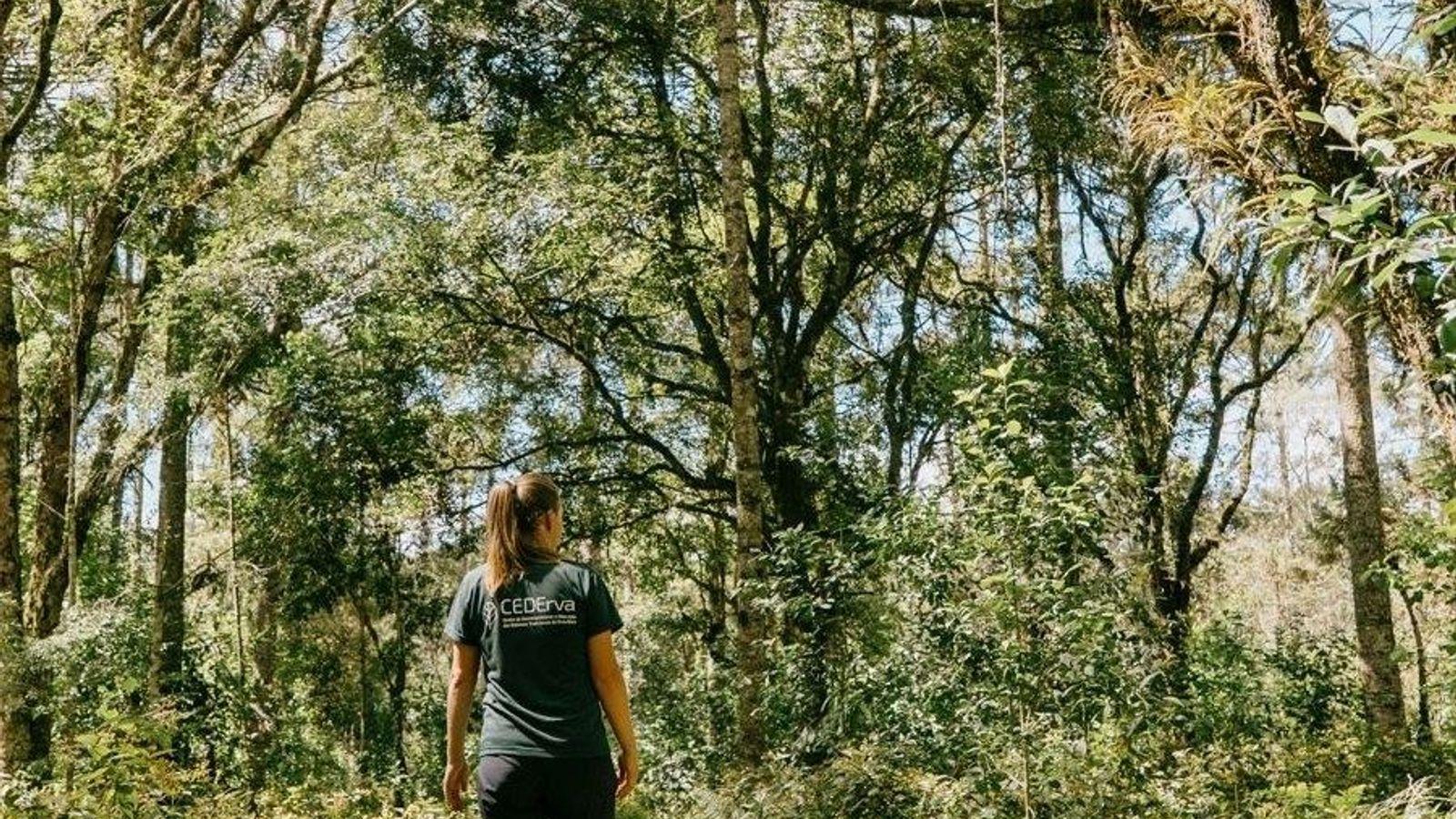
The history of yerba mate in Paraná did not begin with its recognition as part of the Globally Important Agricultural Heritage Systems (GIAHS/FAO). Long before any certification, a legacy had been built over decades by family farmers, organizations, researchers, and communities that maintained traditional ways of producing and interacting with the forest.
For Ana Paula, this history is also a family one. Her father has been involved in family farming for about 30 years and is what we call an “experimental farmer.” It was in this context that the desire for recognition of the traditional yerba mate production system emerged. As she explains, this recognition did not come about in isolation, but as a consequence of a journey that began long before:
GIAHS, actually, came about as a result of several years of history like this, when it comes to yerba mate.
For her, this recognition was the result of a collective journey, filled with experiences, hard work, and resilience. The process formally began in 2019, when researchers from Embrapa identified that the region’s traditional yerba mate production system met the program’s requirements. Based on this finding, work began on the application, and with it, a collaborative effort involving various institutions and organizations in the region.
Unions, social movements, cooperatives, universities, and other entities participated in the process. It took five years for the recognition to be effectively finalized. Today, approximately 400 farmers are involved in this process, spread across 11 municipalities.
They do not necessarily belong to a single association or cooperative. In many cases, they are affiliated with local cooperatives, while the initial accreditation process also involved city governments and labour unions in each municipality. The system’s geographical scope helps explain this diversity of affiliations.
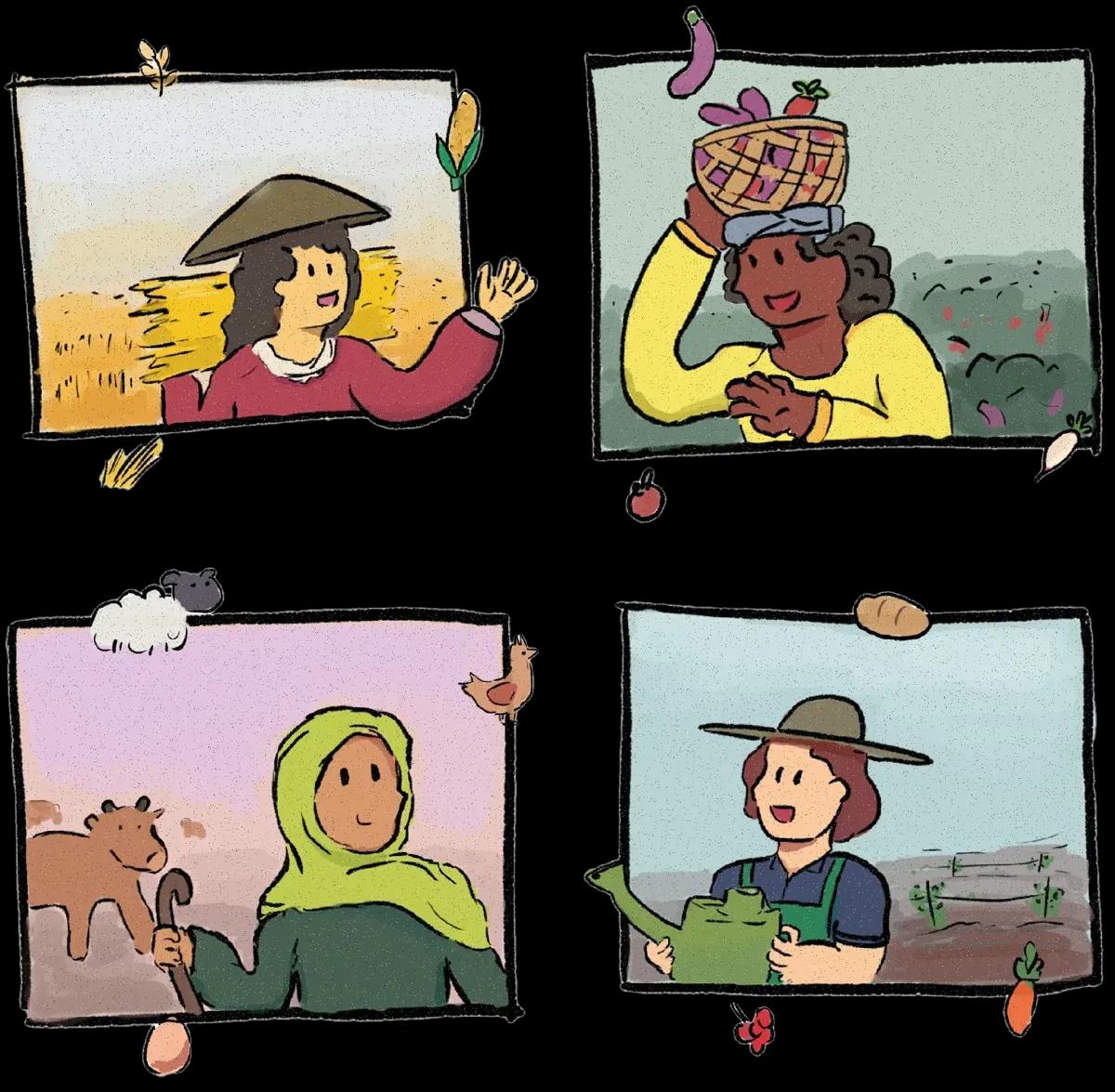
For these families, yerba mate is generally not their sole productive activity. It is part of a diversified farm and serves as a supplement to the family’s income. It is precisely this diversity that helps us understand what is being recognized. The traditional and agroecological system is not limited to yerba mate: rice, potatoes, beans, vegetables, fruits, and other foods are also grown on these farms.
The diversity of the properties is directly linked to families’ food security. For Ana Paula, this is one of the most important elements of the system. The preservation of native seeds, forest management, the use of native fruits, and soil conservation are all part of practices that continue to be carried out in the region. These are forms of knowledge and management that have been maintained over time and that help preserve both production and biodiversity.
So we see a huge variety (right?) of fruits, vegetables, grains, and seeds. So I think that shows a very, very rich biodiversity and food security.
Ana Paula Wenglarek
This production method, however, also faces challenges. One of the main challenges relates to the processing and marketing of yerba mate. Since many families use artisanal methods, traditional processes do not always easily meet legal requirements. Artisanal production can encounter barriers when it reaches the stages of packaging, processing, and formal marketing.
To address this issue, a pilot project was developed involving five families. The yerba mate they produced was sent to a processing plant responsible for transforming the product in accordance with legal requirements. The initiative has helped identify the main bottlenecks and understand which approaches could enable the region’s existing production structures to be strengthened in the future.
Despite the challenges, this recognition has already brought about noticeable changes. Although it is still recent and has not yet led to profound changes in the market, the system has gained greater visibility. Some families have begun to welcome visitors from other regions, and the market has become more receptive to traditionally produced yerba mate.
This process is also characterized by collaboration among families. During FAO missions in the region, Ana Paula witnessed various instances of collective mobilization. Even when there were insufficient resources to organize activities, farmers found ways to welcome visitors, showcase their farms, and share their knowledge.
I think that in all the FAO missions we’ve had here in the region, it has been an example of strong unity among farmers.
The families welcomed visitors with coffee, warmth, and a willingness to show them their properties and explain the practices they used. For Ana Paula, these moments were crucial for strengthening the nomination and showcasing the region’s richness.
Women also play a significant role in this story. Ana Paula estimates that women participate in approximately 90% of the families. They are involved in various stages, from seed collection to seedling production, performing essential roles for the continuity of agricultural practices.
Keeping young people in rural areas, on the other hand, stands out as one of the major challenges for the future. Ana Paula observes an aging population in the communities and a still-limited presence of young people. Therefore, developing new strategies capable of sparking young people’s interest and keeping them in the region is a key concern.
In her view, one way to address this challenge is through the economic valorization of their products. For Ana Paula, when families’ work is better compensated, the quality of life in rural areas improves, and there is greater recognition of the value of that work. This valorization could contribute both to women’s involvement and to keeping new generations in the area.
For her, this valorization is especially important for communities that are often overlooked. Recognition helps strengthen families’ self-esteem and demonstrates that their ways of producing have value. Furthermore, resilience is not limited to physical presence in the territory. It also lies in the decision to continue producing in a certain way, preserving knowledge, upholding values, and believing in a form of agriculture that does not always receive immediate recognition.
For Ana Paula, one way to produce food is through agroecology, that goes beyond the scope of an agricultural technique. It represents a way of life and of relating to the land. It is precisely in this everyday resistance that she finds one of the main explanations for the system’s trajectory. The changes did not happen all at once, nor were they the result of a single initiative. They were built gradually by families who maintained their practices even in the face of difficulties and who, over time, managed to transform a traditional way of producing into a story recognized far beyond their own region.
The way of producing in agroecology is a philosophy of life.
Ana Paula Wenglarek
What this story shows
- The resilience of families is the foundation for preserving the system.
- Yerba mate is part of a much broader system of traditional agriculture and biodiversity.
- This recognition is the result of collaboration among different stakeholders in the region.
- Women and families play fundamental roles, even if they are not always visible.
What would make a difference
Better value for traditional produce, so young people stay.