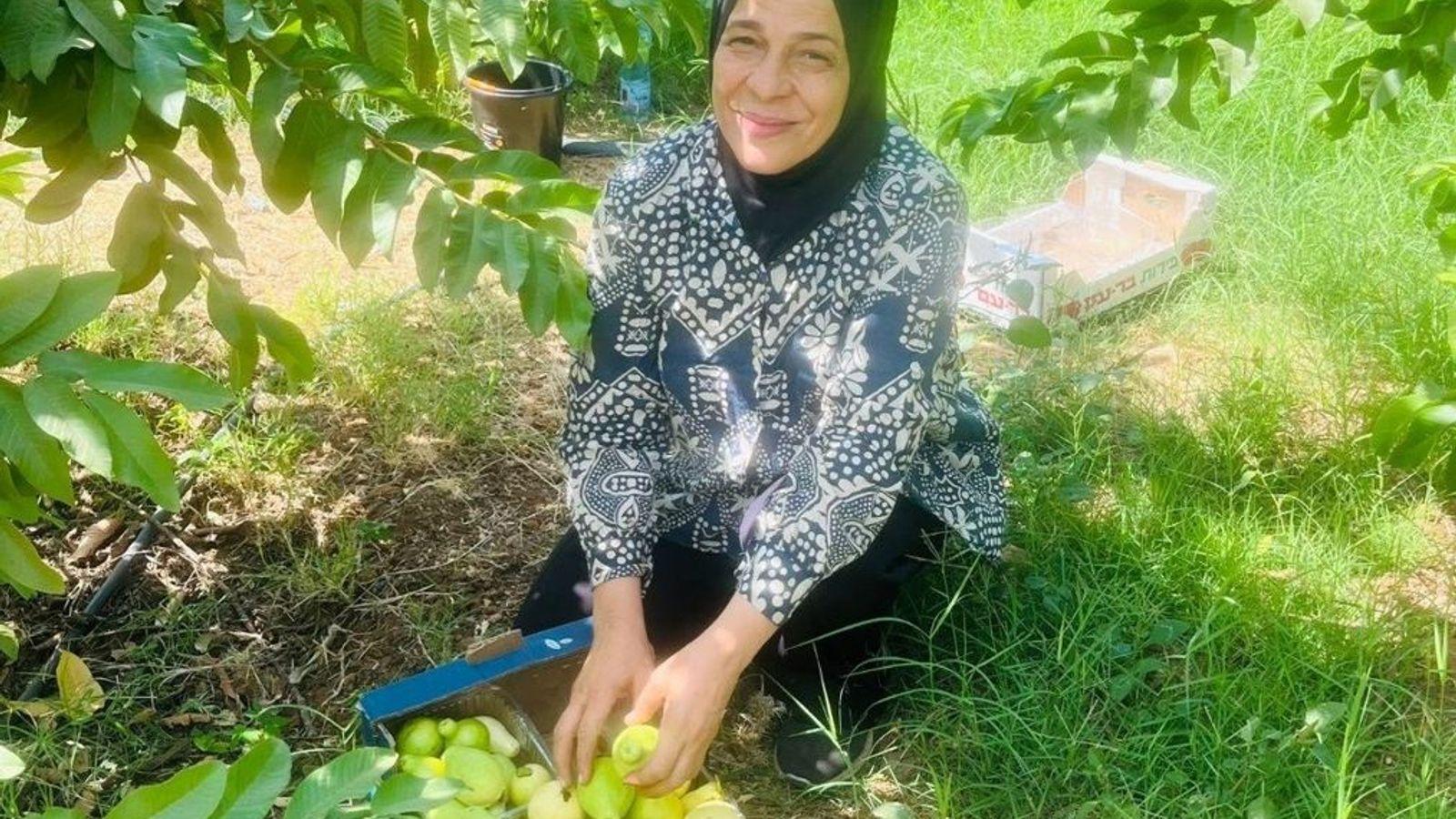
At 5:00 every morning, while much of Jayyous is still asleep, 56-year-old Mayada leaves her home and begins the journey to her agricultural land. She is responsible for supporting her seven-member family, and farming is at the heart of their livelihood. On her land, Mayada cultivates guava and olive trees, but reaching them is never as simple as walking from her home to her fields. Her land lies beyond the Barrier, and each morning she must first reach an Israeli-controlled agricultural gate and wait to be allowed to cross.
Sometimes Mayada waits for hours. She describes being subjected to teasing, humiliation and disrespectful treatment by soldiers while waiting at the gate. Valuable hours of her working day can disappear before she even reaches her trees. At 56, standing for long periods and then beginning physically demanding agricultural work is exhausting, but turning back means losing another day of production and income. So she waits, because behind that gate is not simply a field; it is the land she depends on to help feed and support her family.
This daily reality is closely connected to the wider situation in Jayyous, an agricultural village in Qalqiliya Governorate where farming has sustained families for generations. The Barrier and associated permit and gate system have made access to parts of the village’s agricultural land difficult and unpredictable. For Mayada, however, these restrictions are not statistics in a report. They shape the rhythm of her everyday life. When she is finally permitted to cross, she goes directly to her land and tries to make the most of whatever time remains. She tends her guava and olive trees until around noon and then returns home, where another set of responsibilities awaits her as she cares for her household and family. The following morning, she wakes at five and begins the same journey again.
Mayada has worked hard to keep her land productive despite these conditions. Through support provided by the Palestinian Farmers’ Union (PFU) in partnership with Treedom for Palestine, five dunums of her agricultural land were reclaimed, strengthening her ability to cultivate the land and generate a livelihood from it. For Mayada, reclaiming those five dunums meant much more than improving the physical condition of a piece of land. It meant bringing land back into productive use, creating opportunities for food and income, and strengthening her ability to remain connected to agriculture and provide for her family.
Yet reclaiming land only has meaning when the farmer can reach it. This contradiction has become particularly painful as the olive harvest approaches. Mayada has spent the year caring for her olive trees, reaching them whenever she has been permitted to cross the gate and investing her time and labour in preparing for the harvest. Now, however, she has not been granted a permit to access her land to pick her olives. The trees are there and the olives are almost ready, but Mayada does not know whether she will be allowed to reach them when the time comes to harvest.
For a household of seven people, the possible loss of the olive harvest is not simply the loss of a crop. It means potentially losing food, income and the result of months of labour. What makes the situation especially painful is that Mayada has done everything a farmer is expected to do: she has reclaimed the land, cultivated it, cared for her trees, endured the long waits at the gate and continued farming despite the humiliation and uncertainty. Now, at the moment when an entire year of work should become a harvest, she finds herself waiting once again, this time for a permit.
While speaking about these experiences, Mayada asked a question that captures the essence of her story: “With all this suffering at the gates, am I not a land defender? I cultivate my land and feed my children.” Her words challenge the conventional image of a land defender. For Mayada, defending land does not happen through speeches or in conference rooms. It happens when she wakes at five in the morning and walks toward a gate knowing that she may wait for hours. It happens when she continues farming despite humiliation and uncertainty. It happens when she brings reclaimed land into production, cares for her guava and olive trees and uses what she produces to sustain her family. Her defense of the land is quiet, practical and repeated every day.
PFU’s support to Mayada is part of a broader effort to help Palestinian farming families remain resilient, productive and connected to their land despite the growing pressures on their livelihoods. Land reclamation through the partnership with Treedom strengthened Mayada’s productive agricultural base, but PFU also recognized the importance of helping her family diversify its sources of livelihood. Through the UNDP IPR Programme, PFU supported Mayada with five sheep, providing her with an additional productive asset that can be managed closer to home. The sheep offer another potential source of food and income when access to her agricultural land is disrupted. They cannot replace her land or her olive harvest, and they certainly cannot open the gate, but they can strengthen her family’s ability to cope and continue providing for itself during periods of uncertainty.
Mayada is also not facing these challenges entirely as an individual farmer. She is part of the Jayyous Women’s Cooperative, where women farmers work collectively to strengthen their livelihoods and their role in agriculture. Through PFU, the cooperative has benefited from collective support provided with partners including ACP, NPA and other partners, helping strengthen women’s productive capacities, cooperative work, skills and economic opportunities. This collective dimension is an important part of resilience. When an individual farmer faces restrictions, lost production or economic pressure, belonging to a cooperative creates opportunities for women to share knowledge, work together, strengthen production and marketing, support one another and build a stronger collective voice.
Taken together, these interventions reflect PFU’s wider approach to farmer resilience. Reclaiming land helps restore productive capacity; livestock can diversify household livelihoods; strengthening women’s cooperatives builds collective economic capacity and solidarity; and advocacy helps bring farmers’ experiences to the attention of national and international actors and defend their right to safely reach and cultivate their land. These different forms of support are closely connected, because there is little value in reclaiming land if a farmer cannot reach it, and there is little value in improving production if the farmer cannot collect the harvest.
For PFU, resilience therefore should not mean expecting farmers like Mayada to simply endure more hardship. It means strengthening their ability to continue: to produce food, generate income, support their families, work collectively and remain connected to agriculture despite the shocks and restrictions they face. The five reclaimed dunums, the five sheep and the support provided to the Jayyous Women’s Cooperative are not separate stories. Together, they help create layers of resilience around Mayada and other women farmers so that one restriction, one lost harvest or one economic shock does not force a farming family to abandon its livelihood.
But Mayada should not be defined simply as a beneficiary of these interventions. She is first and foremost a farmer. She has land, knowledge and years of agricultural experience. She works, produces and carries responsibility for seven family members. PFU and its partners are not creating Mayada’s resilience; they are helping strengthen the resources and opportunities that allow her to continue doing what she has always done: farm her land and provide for her family.
Today, that resilience is being tested again. The olive harvest is approaching, and Mayada is ready to collect the fruit of a year’s work. Her land has been reclaimed. Her trees have been cared for. Her olives are almost ready. Through the five sheep, her family has another productive asset, and through her cooperative she is part of a wider community of women farmers supporting one another. Yet none of these can replace her fundamental right to reach the land she cultivates.
Mayada does not want to be defined by suffering. She wants to farm, to harvest what she has grown, to support her family and to live from her work with dignity. Today, however, her olive trees remain on the other side of the gate, and she is still waiting for the permit that will allow her to reach them.
Her own words perhaps explain better than any project report why supporting the resilience of farmers like Mayada matters: “With all this suffering at the gates, am I not a land defender? I cultivate my land and feed my children.”
Mayada is a farmer, a provider, a cooperative member and a woman land defender. Supporting her resilience is not simply about helping her survive another difficult season; it is about helping her and other Palestinian farmers continue producing, supporting their families and maintaining their connection to the land they have worked so hard to cultivate and protect.
What this story shows
- Reclaiming land only has meaning when the farmer can reach it: without a permit, a year of work on her olive trees may not become a harvest.
- Layers of support (reclaimed land, five sheep and a women’s cooperative) help a farming family cope with restrictions and shocks, but cannot replace the right to reach the land.
- Belonging to a cooperative gives women farmers a way to share knowledge, strengthen production and marketing, and build a collective voice.
- Mayada asks to be seen first as a farmer and a land defender, not as a beneficiary or a symbol of suffering.
What would make a difference
A permit to reach and harvest her own olive trees.