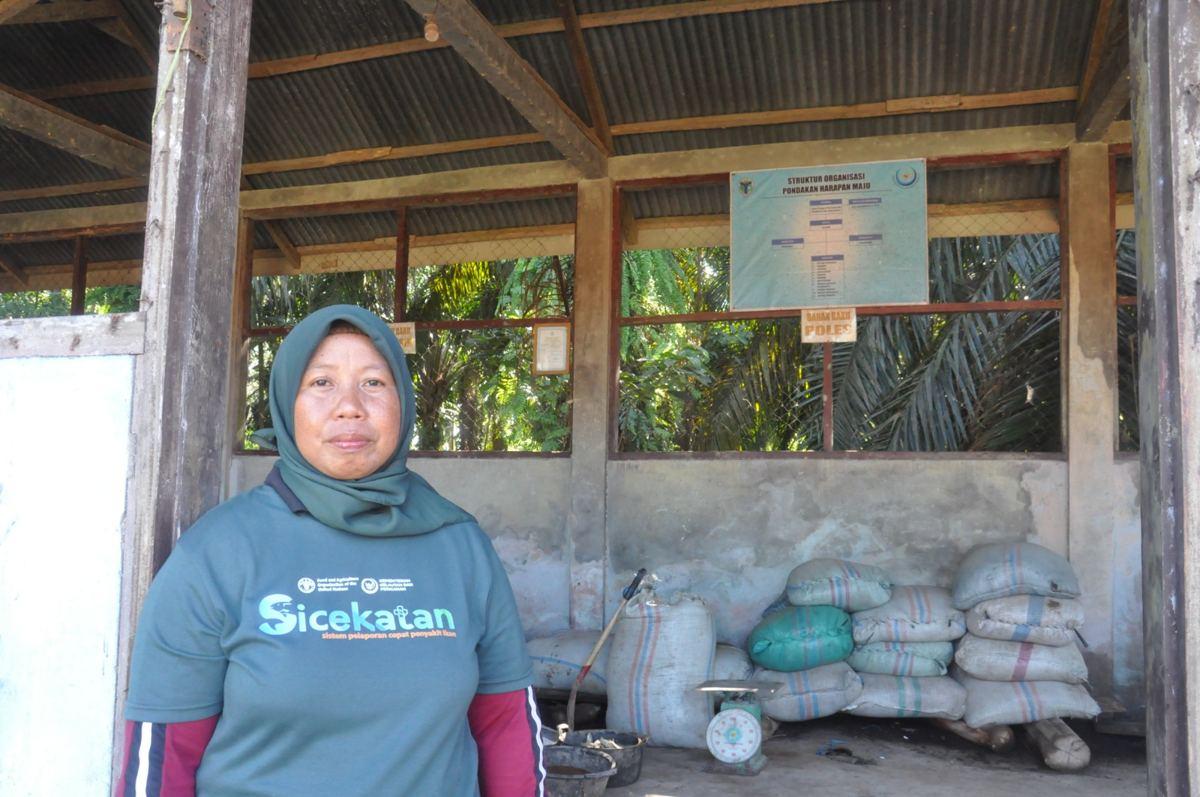
Ernawati stood with 11 other women on a patch of idle land in Jambi, Sumatra, looking at what they hoped would become fish ponds. They were the first women in their village to try farming pangasius. They knew there would be challenges, but they also saw a chance to learn something new. Ernawati began farming pangasius in Jambi, a region better known for rubber and oil palm plantations. The 12 women started together, but after two years the project was not making money and eight had left. Ernawati stayed. “A new door had just opened, and we couldn’t just leave it. We were getting there,” she recalls. She was determined to keep going.
The biggest barrier was the cost of imported fish feed, the farm’s largest expense. For small-scale farmers, buying feed ingredients in bulk was difficult, especially when the project was already struggling to make money. With only four women left, Ernawati and the others needed a more affordable way to keep their ponds going. They began looking at what was already available in their community.
With advice from local extension workers, the four women experimented with a new feed mix made from salted fish, copra meal and rice bran. These were cheap, locally available byproducts. A laboratory test showed that their mixture contained 27 percent protein, confirming that the locally made feed could meet their needs. Their ponds started to thrive.
In 2019, Ernawati formed Harapan Maju, or “Hope Forward”, a farming group that pools resources to buy equipment and shares practical knowledge with other local farmers. The group also sells its fish feed to the community at affordable prices. “I don’t want other small fish farmers to go through the same thing,” she says. She makes sure farmers can buy however little their money allows. FAO-supported training later helped her learn about fish disease management and an Android-based early warning system, which she now teaches to other farmers.
Today, the district produces up to 4 tons of pangasius a day, with villages taking turns to harvest and sell fish at the market, helping provide income throughout the year. Ernawati also sells surplus fish online and leads 19 women who transform fish into packaged products such as meat floss, crackers and nuggets. The challenges have not disappeared, but Ernawati’s local feed solution and farmer-led group have opened more ways for small-scale farmers to access affordable inputs, share knowledge and earn income.
What this story shows
- Small-scale farmers can turn local byproducts into viable fish feed, reducing reliance on costly imports. Governments and extension services should help make these solutions accessible to more farmers.
- When women farmers work together, they can turn one harvest into multiple income opportunities, from shared resources to processed products. Women farmer groups need support to build stronger local value chains.
What would make a difference
Local feed solutions and support for women farmer groups.