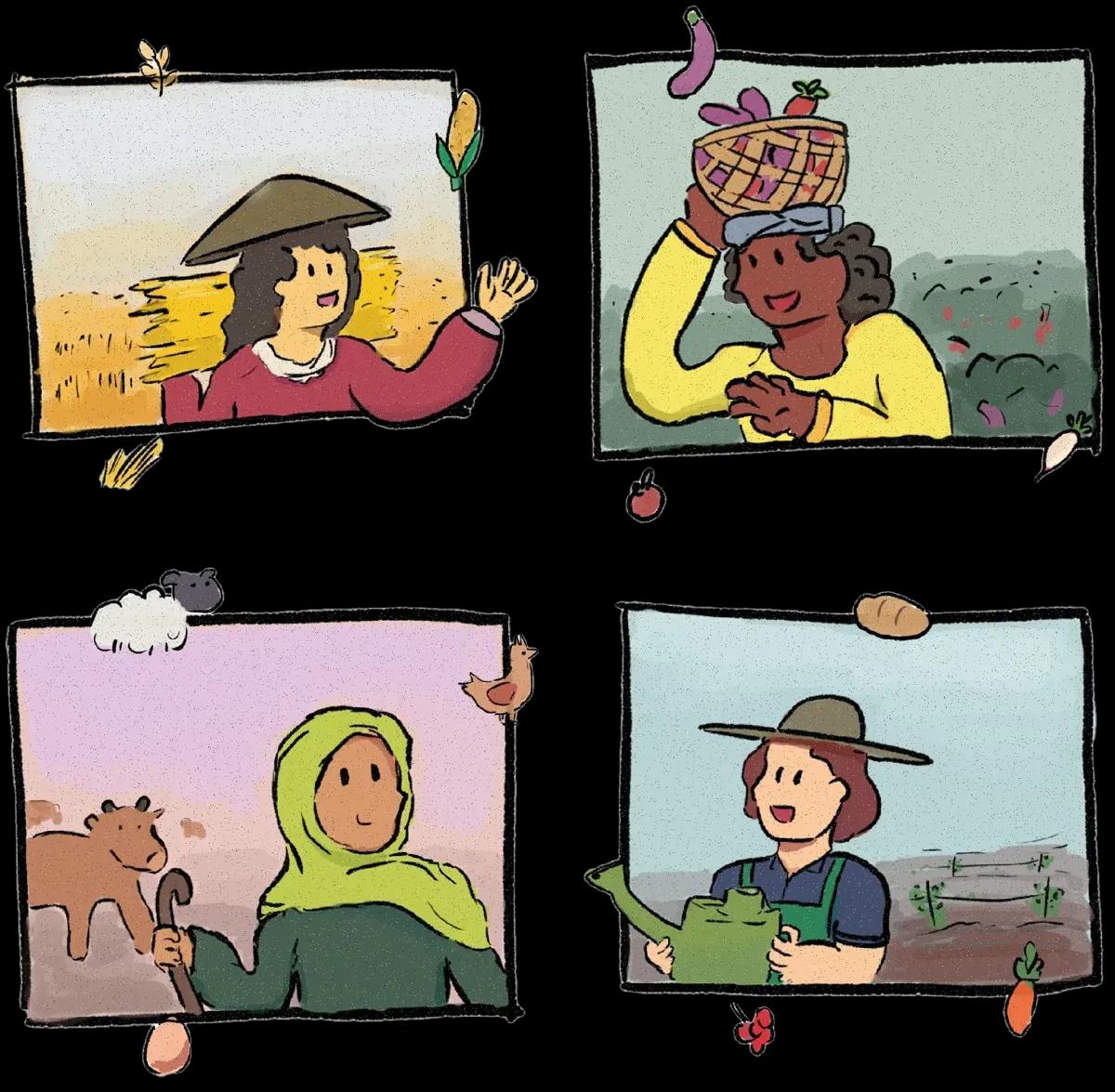
Although we are talking about young women farmers, this is not yet the predominant reality in rural areas. The aging of the rural population and the migration of young people to large urban centers are recurring challenges. The story that follows, therefore, is also a story of staying put: a journey that reveals both the difficulties faced in remaining in the countryside and the paths found to build a future there.
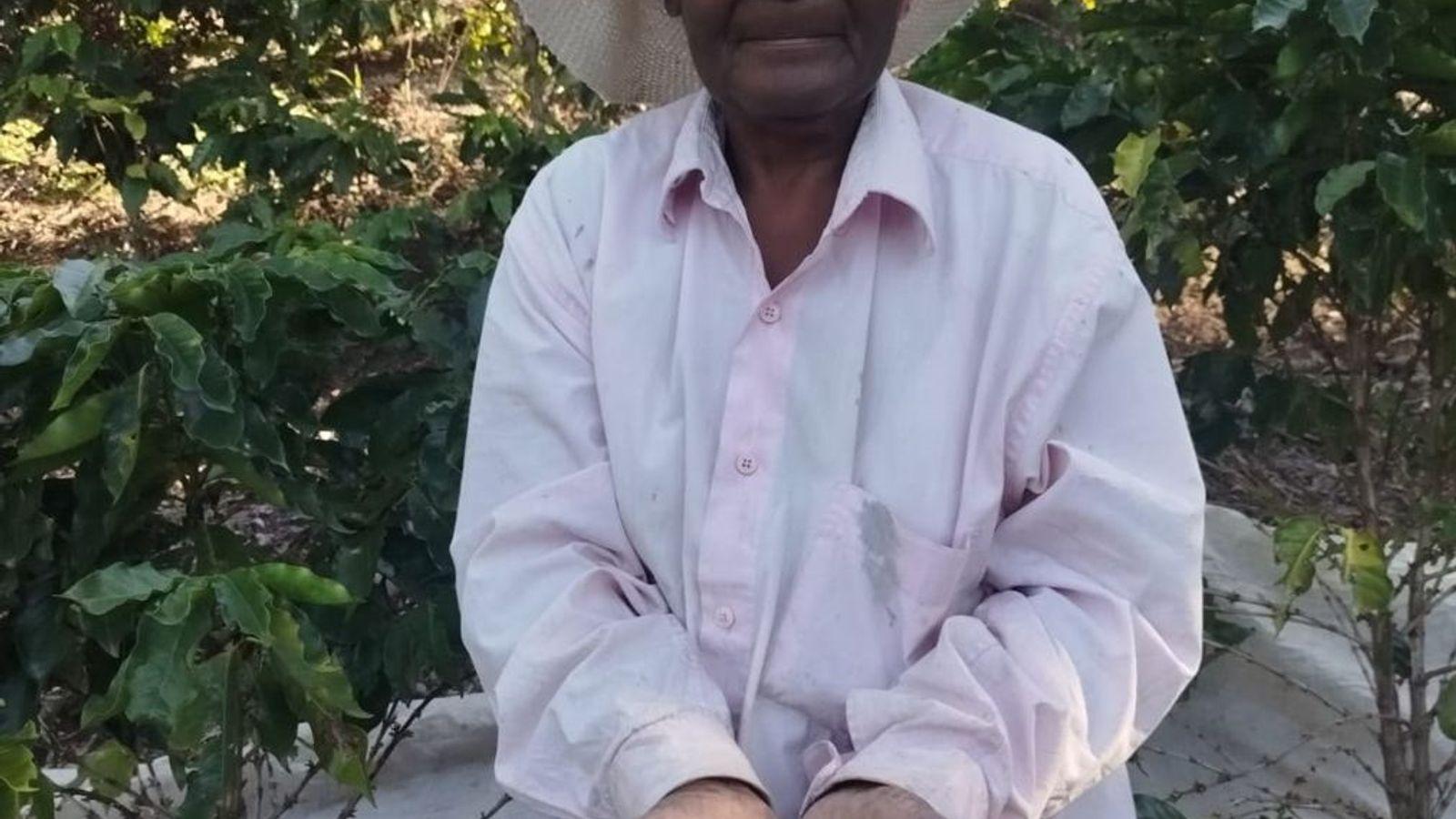
Teonilia is a farmer in Ortigueira and speaks of the land as if it were an inseparable part of her very life. Her relationship with the countryside began early, during her childhood, as she helped with the family’s work. Her father was a coffee farmer, and it was in that environment that she learned, from a young age, the rhythms and difficulties of farming.
At age 12, she was already helping to prune the coffee plants. Later, in 1999, the family moved from the Rolândia region to work in coffee farming and ended up tending to about 1,600 coffee plants. According to her, at that time, their production was sufficient to allow her father to buy a house.
Over the years, Teonilia carved out her own path in agriculture and began growing her own coffee plants. The work, however, has never been easy. Harvesting requires time, care, and, above all, labour, something that has become increasingly difficult to find in the region. Today, she uses the so-called “pano” method for harvesting, a technique that demands even more work and which, in her case, is carried out essentially by her and her partner.
The shortage of workers is just one of the difficulties she has faced throughout her life in the countryside. For a long time, the main problem arose after production: finding someone to buy what the family grew. Teonilia says she used to go out to try to sell her products and struggled to find buyers. This situation began to change when sales opportunities came to the community.
Before that, the family sold their coffee to a large company, and the amount they received wasn’t very significant. With this new marketing approach, which cuts out middlemen and provides fair access to new markets, their financial situation has improved. The same has happened with other crops grown on the farm, such as lettuce, cabbage, chicory, and other vegetables, which are now also sold to the municipality.
For Teonilia, this change in marketing represents much more than simply finding a buyer. It means knowing that there is a purpose for what she produces with such effort. When talking about the possibility of selling coffee today, she sums up her sense of accomplishment in just a few words:
I’m really happy. I’m so glad to know that we now have a definite place where we can bring it [the coffee] in.
Teonilia Maria de Oliveira
Teonilia’s journey is also marked by choices related to how she farms. She says she has always been opposed to the use of pesticides in agriculture and expresses concern both for those who apply these products and for the people who may be affected by them. On their farm, the family also preserves some creole seeds, especially beans, obtained through the farmers’ union and from people in their own community.
Even in the face of difficulties, the farmer demonstrates a deep connection to farm work. When asked why she continues to work the land, her answer goes beyond mere economic necessity. Above all, she speaks of a relationship built over the course of a lifetime:
I really love the land; I really love working with vegetables, I’ve always loved it. Coffee, too: we’ve always loved working with coffee...
For her, farming is not just a job, but a way of life. Over the years, the city of Ortigueira has also come to hold a special place in her life. She notes that access and transportation have improved, as have the roads and the support she receives. Whereas rain and rough roads used to prevent her from traveling, she says that today, when she needs a ride, someone comes to pick her up at home.
Despite being part of this male-dominated world, Teonilia also emphasizes her own presence in this space. She notes that she is the only woman in that context and, at the same time, continues to lead production alongside her partner.
As she looks back on her journey, Teonilia acknowledges the difficulties she has faced, but also expresses hope for the future. The experience of starting out as a child, working alongside her father, facing the challenges of selling her coffee, and later securing a more stable market for her own production gives coffee a meaning that goes beyond the product itself.
Today, as she reflects on her own production, she places her hope in the next harvest and in the results of so many years of work. Above all, she celebrates the possibility of producing, knowing that there is a path for what comes from the earth to reach the consumer. Her story illustrates a form of agriculture built slowly, rooted in family heritage and autonomy, navigating the daily challenges while finding satisfaction in continuing to do what she loves. Ultimately, Teonilia’s relationship with the land can be summed up by the very way she speaks of her life: with simplicity, but also with pride. After so many years working with coffee and vegetables, staying in the countryside seems to represent not only the continuation of a family tradition, but also the continuation of a story that began in her childhood and is still being cultivated.
What this story shows
- Agriculture represents a way of life and family continuity.
- Access to markets can transform the economic autonomy of farming families.
- Agroecological production is linked to health, care, and food sovereignty.
- Women’s continued presence in rural areas is tied to their connection to the land, but also to the possibility of independence.
- Coffee stands as a symbol of hope, work, and achievement.
What would make a difference
A stable place to sell what she grows, which she now has.